Author Noa Yedlin Discusses "House Arrest" with IIJS Prof. Naama Harel

On Monday, November 9, the Institute was pleased to welcome author Noa Yedlin for a conversation about the recent English translation of her 2013 novel, House Arrest. Yedlin was joined in conversation by IIJS Prof. Naama Harel.

Barak Fogel, an unemployed professor, newly separated from his wife, awakes one morning to startling news: his beloved mother, deputy director of the Theodore Hirsch Centre for Sustainable Peace, professor of Israel studies, a refined collector of Israeli art and an avid member of several charitable associations—is suspected of embezzling 3.4 million shekels from her place of work.

Barak now attempts to navigate within this turbulent reality: between his sister, who is convinced their mother is innocent, and his skeptical brother; between the wife he has just separated from and who is still present in everyone’s lives, and his friends who disappear; between old mistakes and new insults – all played out in front of a relentless Media.

More than anything, he must reconsider the character of the mother that he knows so well. Who is this woman with the wonderful sense of humour, sharp wit and a ready inclination for righteousness, who now sits under house arrest?

House Arrest takes apart its characters with a sharpened knife, building from them an original, tumultuous novel about family and money, motherhood and children, failure and success, social standing and self-image.

Noa Yedlin is an Israeli author, the recipient of the Sapir Prize (the Israeli Man Booker) and the Prime Minister's Literature Award and author of the bestselling House Arrest, Stockholm, People Like Us and The Wrong Book. Yedlin was named by Haaretz Magazine one of "66 Israeli Women You Should Know”.

Yedlin is also the creator of a two-season TV series based on her bestselling novel Stockholm (the Israeli Best Mini-Series TV Award). A German remake of the series (You Don't Die Among Friends) won Best Scripted Format at 2021 International Format Awards and Best European Series at La Rochelle Festival De La Fiction 2021. The series is now being re-made by SVT Sweden (broadcast: Christmas 2022). Her bestselling novel People Like Us is currently being developed into a series in Israel. A stage adaption of House Arrest is now playing at Beit Lessin Theater in Tel Aviv.

Yedlin is considered one of Israel's top writers. Her novels – widely known for their dark and subtle humor - sketch with biting precision the complex relationships both within the family and outside of it, while capturing and deconstructing the spirit of the times. Yedlin deals with global phenomena that infiltrate the personal realm and shape our everyday lives - the rise and fall of social elites, shifts in the balance of power and the never-ending battle between individualism and conformism.

Naama Harel specializes in Modern Hebrew literature, Modern Jewish literature, and Israeli culture, as well as Human-Animal Studies, ecocriticism, and posthumanism. She holds a Ph.D. in Hebrew and Comparative Literature from the University of Haifa. She is the author of Kafka’s Zoopoetics: Beyond the Human-Animal Barrier (University of Michigan Press, 2020), and The Jew, the Beauty, and the Beast: Gender and Animality in Modernist Hebrew Fiction (Rutgers University Press, 2025). Her current book project, Of Slaughter, explores literary representations of Jewish ritual slaughterers and slaughtered animals. She has published various scholarly articles on related themes, including compassion for animals (Tza’ar ba’alei chayim) in Hebrew revival literature, metamorphosis tales, anthropomorphism, humanimal hybridity and liminality, and species fluidity.

The discussion is available to view in full below.


Supported by the generosity of the Kaye and Appel families.

Keep up with the IIJS on Facebook, Instagram, X, and YouTube or join our mailing list for updates!

Seth Schwartz discusses his book, "The Jews of Asia Minor, 215 BCE–500 CE: Text and Materiality"

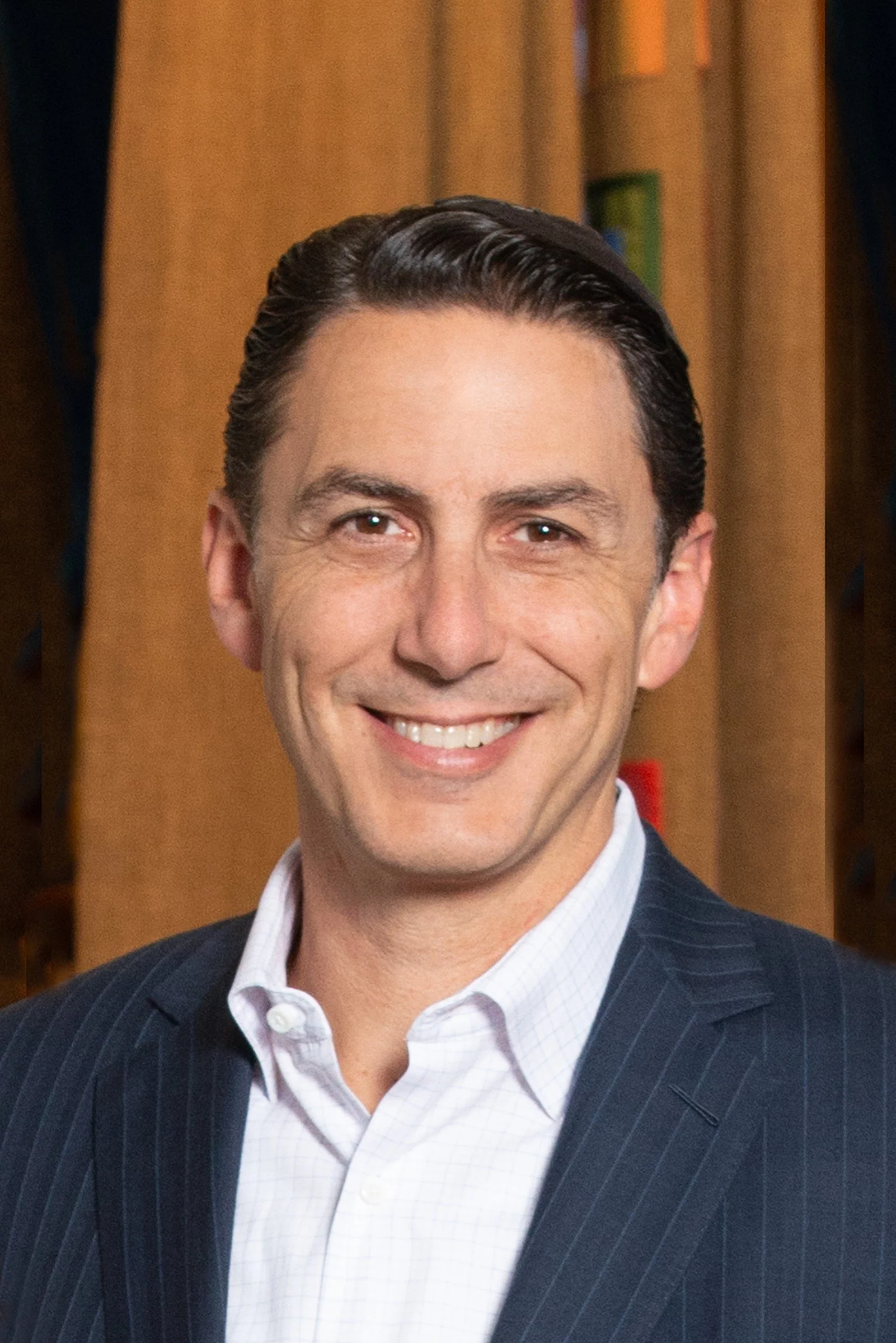
Together with the Department of History and the Center for the Ancient Mediterranean, IIJS was pleased to host Prof. Seth Schwartz for a discussion on The Jews of Asia Minor, 215 BCE–500 CE: Text and Materiality. Prof. John Ma of Columbia University’s History Department joined him for the conversation.

The Jews of Asia Minor, 215 BCE to 500 CE: Text and Materiality explores the benefits and pitfalls of writing about an archaeologically rich but literarily poor topic. The results of this inquiry are strongly revisionist: The Jews in ancient Asia Minor, or Anatolia, are shown to have been far from having achieved a perfect balance between integration in their host cities and self-preservation that scholars have long ascribed to them. Rather, the Jews experienced conflict and poverty, struggling to carve out a place for themselves in the Greek cities of Asia. Jewish communal institutions played little role before Late Antiquity, but Jews sometimes achieved a diffuse sense of community through trade guild membership and participation in theatrical events. Surprisingly, many of them expressed pride in their Roman identity but rarely, or never, their local civic identity. Even during the Jews’ brief period of prosperity and heightened civic engagement, c. 400 CE, their Jewish lives were characterized by strong localism, featuring many elements that distinguish the Jews of Asia sharply from those elsewhere in the Roman Empire.

Seth Schwartz is the Lucius N. Littauer Professor of Classical Jewish Civilization in the Departments of History and Classics at Columbia University, where he also chairs the Graduate Program in Classical Studies. He received his PhD in History at Columbia in 1985. Before returning to Columbia in 2009, Schwartz taught at Cornell, the University of Rhode Island and the Jewish Theological Seminary, had research fellowships at the Hebrew University of Jerusalem, the Harvard Society of Fellows and King’s College Cambridge. He wrote Consuls of the Later Roman Empire (Atlanta: Scholars Press, 1987)(with Roger Bagnall, Alan Cameron and Klaas Worp), Josephus and Judaean Politics (Leiden: Brill, 1990), Imperialism and Jewish Society, 200 BCE to 640 CE (Princeton: Princeton University Press, 2001), Were the Jews a Mediterranean Society? Reciprocity and Solidarity in Ancient Judaism (Princeton: Princeton University Press, 2010), and The Ancient Jews From Alexander to Muhammad (Cambridge: Cambridge University Press, 2014).

John Ma teaches in the Department of Classics at Columbia. He completed a BA in Classics and a DPhil in Ancient History at Oxford, where he taught for 15 years before moving to Columbia. He is interested in ancient history, principally Hellenistic, epigraphical evidence, historical geography, paying particular attention to the interaction of local communities and empire. His latest monograph is an essay on the history of the Greek city-state: Polis (2024).

The discussion is available to view in full below.


Supported by the generosity of the Kaye and Radov families.

Keep up with the IIJS on Facebook, Instagram, X, and YouTube or join our mailing list for updates!

Roy Assaf joins IIJS to discuss "Cabaret Total"

IIJS hosted a virtual screening of Cabaret Total followed by a Q&A with writer, director, and star Roy Assaf.

Acclaimed Israeli actor Roy Assaf (Ophir Award winner for Wounded Land and God's Neighbors) co-writes and stars in his feature directing debut about a high school drama teacher who stages vivid cabaret shows in his Negev town’s community center. When a comment to his students makes him a target of social media rage, his art and life merge in escalating performances of 21st-Century anxiety.

Assaf sings, dances, juggles, and monologues in a virtuosic performance, shot with Ophir-Award-winning cinematography reminiscent of the Oscar-winning Birdman. Frequent attendees at IIJS film events will recognize Roy Assaf from his films Matchmaking, All I Can Do, and Wedding Doll.

The Q&A is available to view in full below.


This event was made possible by the generosity of the Appel and Kaye families.

Keep up with the IIJS on Facebook, Instagram, X, and YouTube or join our mailing list for updates!

Joseph Zeira joins IIJS for "Israel: The Cost of the Conflict"

Prof. Joseph Zeira joined the Institute for Israel and Jewish Studies on Tuesday, October 20, to discuss the long-term economic impact of conflict, conscription, and defense spending in Israel.

This talk described the costs of the Israeli-Arab conflict to Israel. These are direct costs, which are mainly military spending, and indirect costs, which are mainly forgone output. During the period of the wide conflict with the Arab countries, between 1948 and 1980, the direct costs of the conflict were very high, as it involved conventional wars. After the Peace with Egypt the conflict became narrow, between Israel and the Palestinians mainly. This involved fighting with militias, which has low direct costs. However, the indirect costs remained high and even increased. First, every eruption of the conflict with the Palestinians causes a recession. Second, conscription delays entry of young people to their work career and that is costly as it reduces their human capital for many years. The largest indirect cost is a result of the high risk of the conflict, which deters investment. As a result, the conflict reduces the relative size of physical capital in Israel. Hence, the reduction of this risk could increase output by more than 26 percent.

In contrast to these high costs, the economic benefits of the conflict are rather low.

Joseph Zeira is professor emeritus of Economics in the Hebrew University of Jerusalem. During the years, he visited Harvard, Brown, Brandeis, the University of Crete, Columbia University and Northwestern University. Joseph Zeira is a macroeconomist, who specializes in a number of areas: technology and economic growth, income distribution, money and liquidity, and the economy of Israel. His book, The Israeli Economy: A Story of Success and Costs, was published in 2021 by Princeton University Press.

Joseph Zeira has also been involved in a number of professional activities, as an advisor to the Minister of Finance in Israel, as a board member of a Pension Fund, and in the Aix Group, where Israelis, Palestinians, and Internationals study the economic aspects of a potential peace agreement between Israel and Palestine. In 2014, he was a member of a government committee for reducing poverty in Israel. In 2016-2020, he served as the president of the Israeli Economic Association. Since 2020 he is the Chair of the Magid Institute for External Education in the Hebrew University.

The lecture is available to view in full below.


Keep up with the IIJS on Facebook, Instagram, X, and YouTube or join our mailing list for updates!
IIJS Hosts Zisl Slepovitch for a Presentation on "Jewish fiddle from Sofia Magid’s collection"

Zisl Slepovitch joined IIJS on Thursday, October 15, 2026, for a discussion on the Jewish fiddle in pre-World War II southeastern Belarus from Sofia Magid’s collection.

Sofia Magid’s recordings of Jewish musicians in Volyn and southeastern Belarus made between 1928-38, constitute one of a kind document that preserves and conveys styles and repertoire of Jewish instrumentalists and folk singers, of various age groups, professional, semiprofessional, and amateur alike. Following publication of these pieces’ transcriptions done by D. Zisl Slepovitch, this presentation is the first attempt to systematize this relatively small but uniquely important collection.

D. Zisl Slepovitch, born and raised in Minsk, Belarus, a New Yorker since 2008; he is a Jewish music scholar (PhD, Belarusian State Academy of Music), a sought-after classical, klezmer, and improvised music performer (woodwinds, keyboards), conductor, music producer, band leader, educator (music, Yiddish language), composer/arranger, and a musician-actor. He is a founding member of the Litvakus klezmer band, a Musician-in-Residence at the Fortunoff Video Archive for Holocaust Testimonies at Yale University, a pianist and music coordinator at Stephen Wise Free Synagogue (NYC), and a frequent contributor to the National Yiddish Theatre Folksbiene (NYC). His critically acclaimed credits include Musical Treasures from Sofia Magid's Jewish Collection (music folios series), Songs from Testimonies with the Zisl Slepovitch Ensemble and Sasha Lurje (3 albums), Fiddler on the Roof in Yiddish (off-Broadway, cast album), Defiance (movie), and more. @zislepovitch http://DmitriSlepovitch.com

The lecture is available to view in full below.


Supported by the generosity of the Kaye and Radov families.

Keep up with the IIJS on Facebook, Instagram, and Twitter or join our mailing list for updates!
Nicholas Lemann joins IIJS for a book talk on "Returning: A Search for Home Across Three Centuries"

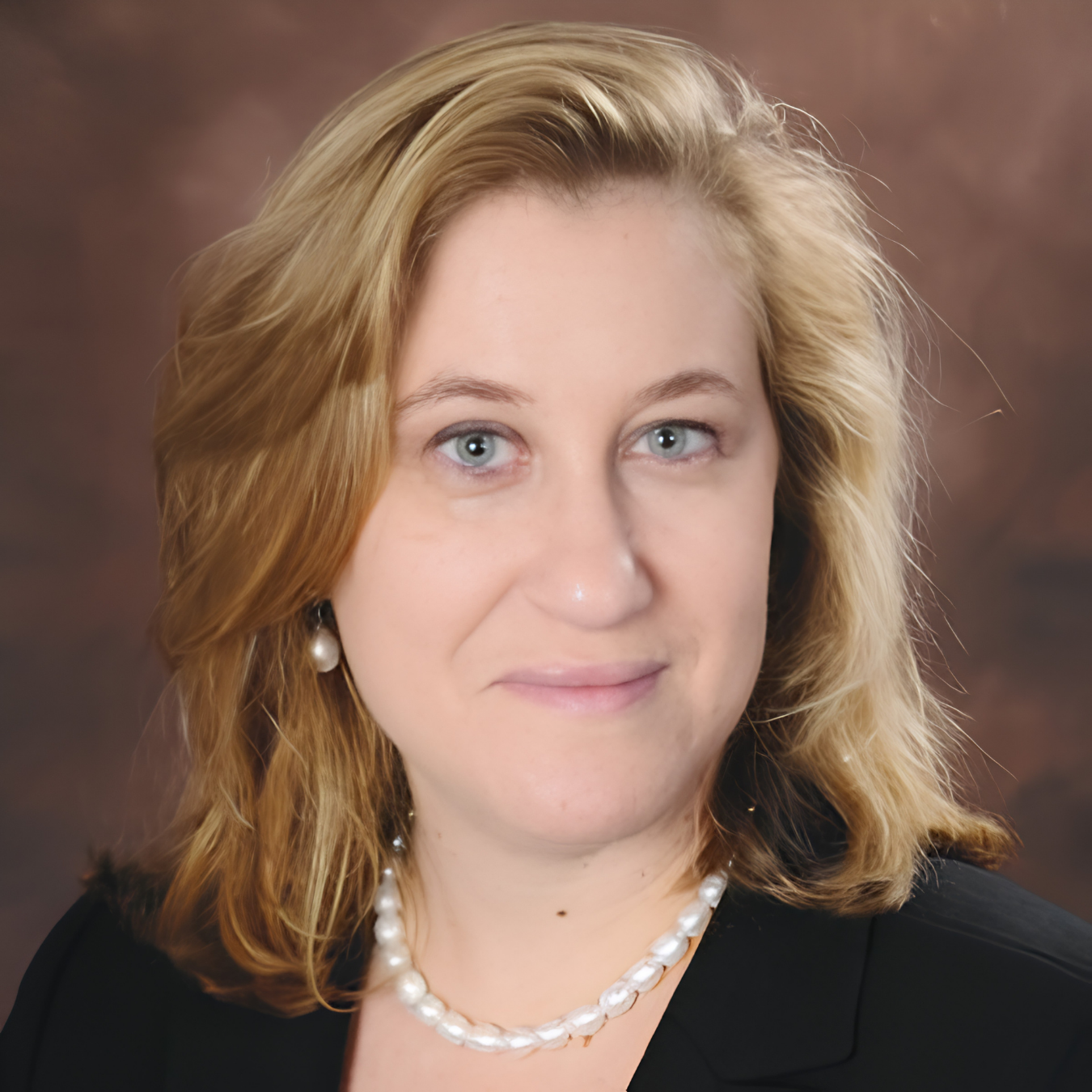
IIJS was pleased to welcome Prof. Nicholas Lemann, on Tuesday, October 13, 2026, for a discussion of his new book, Returning: A Search for Home Across Three Centuries, joined in conversation by IIJS Prof. Jeremy Dauber.

Nicholas Lemann, a veteran New Yorker correspondent, grew up in New Orleans, the son of German Jews in a world of gilded privilege. Yet in contrast to his parents’ generation, which always sought to downplay their religious background, Lemann was intrigued by his roots, thinking he wanted to be like Jack Burden, the ever-curious reporter in Robert Penn Warren’s All the King’s Men.

And like his fictional hero, who gets drawn into a web of Southern political intrigue, Lemann in Returning delves deeply into the family story—from their arrival in the 1830s as peddlers from Germany, to their becoming plantation owners and department store owners after the Civil War, to their emergence as aspirants in the aristocratic world of New Orleans, where they could never quite belong.

Nicholas Lemann was born and raised in New Orleans. He began his journalism career there as a 17-year-old staff writer for an alternate weekly paper called the Vieux Carre Courier. He graduated from Harvard College, where he was president of The Harvard Crimson, in 1976, magna cum laude in American History and Literature. He has worked as a reporter and editor at The Washington Monthly, Texas Monthly, The Washington Post, The Atlantic (where he was national correspondent from 1983 to 1999) and The New Yorker (where he has been a staff writer for twenty-five years), and contributed to many other publications. From 2003 to 2013 he was dean of Columbia Journalism School, leading a period of significant growth and change for the school, and since then he has been a professor there. At Columbia he has also helped launch Columbia Global Reports, a publishing venture that he continues to lead, Columbia World Projects, and the Knight Columbia First Amendment Institute. He is currently one of three co-chairs of the university’s antisemitism task force. His books include The Promised Land (1991), The Big Test (1999), Redemption (2006), Transaction Man (2019), and, most recently, Higher Admissions (2024). He is a member of several honorary societies, including the American Philosophical Society, the New York Institute for the Humanities, the Society of American Historians, the American Academy of Political and Social Science, and the American Academy of Arts and Sciences, where he serves as co-chair of the academy’s Commission on Reimagining Our Economy.

Jeremy Dauber is the Atran Professor of Yiddish Language, Literature and Culture and, for a decade, directed the Institute of Israel and Jewish Studies at Columbia University. He is also currently the Mendelson Professor of American Studies and the director of Columbia’s Center for American Studies. For twelve years, he co-edited Prooftexts: A Journal of Jewish Literary History with Barbara Mann. His books include Antonio's Devils: Writers of the Jewish Enlightenment and the Birth of Modern Hebrew and Yiddish Literature (Stanford University Press, 2004); In the Demon's Bedroom: Yiddish Literature and the Early Modern (Yale University Press; 2010); The Worlds of Sholem Aleichem (Schocken Books, 2013); Jewish Comedy: A Serious History (W.W. Norton, 2017); American Comics: A History (W.W. Norton, 2021); and Mel Brooks: Disobedient Jew (Yale University Press: 2023). His most recent book, American Scary: A History of Horror from Salem to Stephen King (Algonquin: 2024), was named a best book of 2024 by the Boston Globe. He is an elected member of the American Academy for Jewish Research.

The discussion is available to view in full below.


Keep up with the IIJS on Facebook, Instagram, and Twitter or join our mailing list for updates!
Columbia Spectator Covers IIJS Event: "Framing October 7"

The Columbia Spectator recently covered the third installment of the Institute’s Framing October 7 series, “Perspectives from Inside the U.S. Situation Room,” featuring former U.S. Ambassador to Israel Jack Lew and former White House Senior Advisor Amos Hochstein reflecting on the U.S. response to the Oct. 7 attacks and their aftermath.

Read the Spectator’s coverage here:

“Columbia hosts former Biden administration officials to discuss Oct. 7 attack from inside the Situation Room” (October 10, 2026)

You can read more about the event and view the full discussion here.

Perspectives from Inside the U.S. Situation Room: Jack Lew and Amos Hochstein on “Framing October 7”

IIJS was honored to host former U.S. Ambassador to Israel Jack Lew and former White House Senior Advisor Amos Hochstein for a conversation with IIJS Professor Rebecca Kobrin about the U.S. response to October 7 and its aftermath.

After October 7, 2023, when Hamas invaded Israel, the United States government responded with support and empathy. While the attack not only shattered assumptions about Jewish sovereignty, security, and politics, it has also reshaped Israel’s relationship with the United States, its ally for decades. In the months that followed, the U.S. government offered thoughtful support and made key interventions.

On Wednesday, October 7, 2026, Jack Lew, former U.S. Ambassador to Israel and current Professor of International and Public Affairs and faculty policy director of the Institute of Global Politics, and Amos Hochstein, Senior Advisor to President Biden and his Lead Envoy to the Middle East and currently Carnegie Distinguished Fellow at SIPA's Institute for Global Politics, joined IIJS Professor Rebecca Kobrin to reflect on this transformational moment from the vantage point of the American government.  

How did the Biden administration see and make sense of October 7 and its consequences?  How should this moment be integrated into the broader history of US/Israel relations? What insights do those from inside the Situation Room offer for understanding this moment? In what ways are they making sense of the current shifts in the Democratic Party as a result of the Hamas–Israel conflict reshaping the Middle East?

Jack Lew

Secretary Jack Lew returned to Columbia/SIPA as Professor of International and Public Affairs and faculty policy director of the Institute of Global Politics after serving as United States Ambassador to Israel in the Biden Administration. Previously, he served as the 76th Secretary of the Treasury and White House Chief of Staff in the Obama Administration.  Earlier, under President Obama, he served as Deputy Secretary of State for Management and Resources and as Director of the Office of Management and Budget (OMB), a position he also held in President Clinton's cabinet when the U.S. budget operated at a surplus for three consecutive years.  

Lew began his service in the White House in the Clinton Administration as Special Assistant to the President. In that position, he played a lead role in designing AmeriCorps, the national service program, and worked on health care reform with First Lady Hillary Rodham Clinton.  He began his career on Capitol Hill where he was Executive Director of the Democratic Steering and Policy Committee under House Speaker Thomas P. O’Neill, Jr.  

In the private sector, Lew served as managing director and chief operating officer for two different Citigroup business units and as Managing Partner at Lindsay Goldberg.  Prior to that, he was executive vice president and chief operating officer of New York University, where he was responsible for budget, finance, and operations, and served as a professor of public administration. He is a graduate of Harvard College and Georgetown University Law Center and a member of the American Academy of Arts and Sciences and the Council on Foreign Relations.

Amos Hochstein

Amos Hochstein serves as Managing Partner at TWG Global, a diversified holding company focused on scaling innovative businesses across AI, technology, financial services, energy, and sports. He is a recognized global energy expert, senior negotiator, and business executive with extensive experience in national security, economic strategy, and international investments. He has been at the forefront of shaping US national security, energy security, infrastructure investments, and high-stakes negotiations.

With over 20 years of experience in the White House, State Department, and Capitol Hill, Hochstein most recently served as deputy assistant and senior advisor to President Biden. He was the lead US negotiator in securing the ceasefire agreement between Israel and Lebanon, negotiating a truce between Israel and Hezbollah. Previously, he negotiated several global economic and diplomatic agreements, including the Israel-Lebanon maritime boundary agreement, which resolved a long-standing dispute and enabled significant investment opportunities in the Eastern Mediterranean.

Hochstein led negotiations leading to the historic India-Middle East-Europe Corridor (IMEC).  Launched by leaders at the G20, IMEC connects the rail, energy, and telecommunications infrastructure of India and Europe through the UAE, Saudi Arabia, and Israel.

Hochstein was the driving force behind the G7 Partnership for Global Infrastructure and Investment (PGI), leading global efforts to successfully mobilize billions of USD in investments in critical minerals and energy, high-speed digital infrastructure, commercial rail, and agribusiness. He also led the effort to revitalize the Lobito Corridor, a transformative infrastructure initiative that enhances trade and connectivity across Africa, as well as the Luzon Economic Corridor, which helped develop infrastructure in the Philippines and accelerate growth in critical industries by reducing energy and logistics costs.

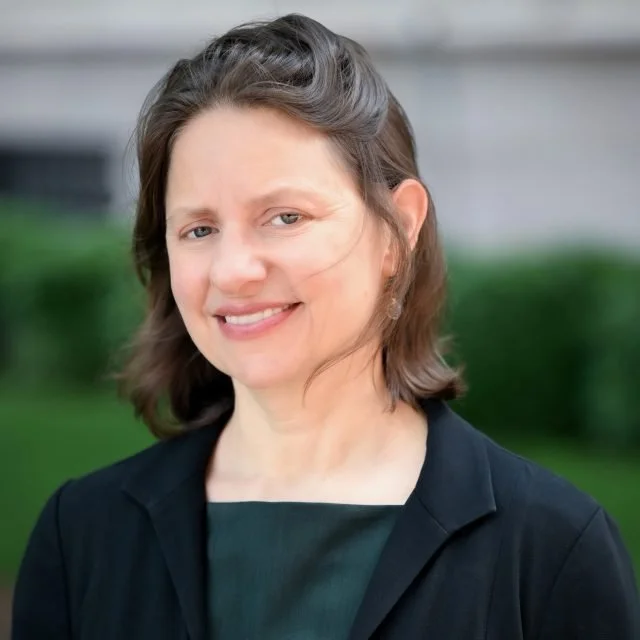
Rebecca Kobrin is the Russell and Bettina Knapp Associate Professor of American Jewish History, in Columbia University’s Department of History, where she teaches in the field of American Jewish History, specializing in modern Jewish migration. She also served as the Co-Director of the Institute for Israel and Jewish Studies at Columbia.

The discussion is available to view in full below.

Prof. Rebecca Kobrin in Conversation with Prof. Kim Phillips-Fein on "Credit to the Nation"

The Institute was pleased to host Prof. Rebecca Kobrin for a discussion of her recent book Credit to the Nation on Thursday, September 24. She was joined in conversation by Prof. Kim Phillips-Fein of Columbia University’s History Department.

This event was co-sponsored by the Harriman Institute.

What are immigrants to do when business opportunities abound in their new home, but banks refuse essential financial support? How could they make the journey in the first place without helping hands? In this lively history, Rebecca Kobrin chronicles the turn-of-the-twentieth-century Jewish immigrants who stepped up by doing the lending themselves. Arriving from the Russian Empire and settling primarily in New York, they made livelihoods by assisting fellow Jews so they could purchase passage to the United States and, after arriving, obtain credit that other lenders would not dare provide.

Credit to the Nation traces the novel practices of bankers who not only enabled the flourishing of American Jewry but also revolutionized the US financial industry. Drawing on previously unexamined archival materials in Russian, Yiddish, German, and English, Kobrin tells a story that is also crucial to the history of New York, as immigrant bankers’ financing of real estate transformed wide swathes of the city. Lenders drove a boom in the prices of tenement buildings, but heavy speculation eventually precipitated the downfall of immigrant banking. Kobrin notes in particular the case of the Bank of United States—a private lender catering primarily to Jewish businessmen—which the Federal Reserve refused to bail out from bankruptcy in 1930. Immigrants’ grasping for credit, and the rise and fall of immigrant banks, gave way to a contemporary banking industry that, ironically, refuses credit to today’s immigrants. Kobrin reminds us that now, as before, the denial of credit pushes entrepreneurial Americans into unregulated money-lending and the trap of endless debt.

Rebecca Kobrin

Rebecca Kobrin is the Russell and Bettina Knapp Associate Professor of American Jewish History, in Columbia University’s Department of History, where she teaches in the field of American Jewish History, specializing in modern Jewish migration. She also served as the Co-Director of the Institute for Israel and Jewish Studies at Columbia.

Her research, teaching, and publications engage in the fields of international migration, urban history, Jewish history, American religion, and diaspora studies. She received her B.A. (1994) from Yale University. She earned a Ph.D. (2002) from the University of Pennsylvania. She served as the Blaustein Post-Doctoral Fellow at Yale University (2002-2004) and the American Academy of Jewish Research Post-Doctoral Fellow at New York University (2004-6). Her book Jewish Bialystok and Its Diaspora (Indiana University Press, 2010), was awarded the Jordan Schnitzer prize (2012). She is the editor of Chosen Capital: The Jewish Encounter with American Capitalism (Rutgers University Press, 2012), and is co-editor with Adam Teller of Purchasing Power: The Economics of Jewish History (University of Pennsylvania Press, 2015). In 2015, she was awarded Columbia University’s Lenfest Distinguished Faculty Award for her outstanding teaching and her inspirational mentoring of her students.

She is one of the principal investigators leading the award-winning digital humanities Mapping Historical New York project, an award-winning map that visualizes the demographic and spatial changes wrought in New York City between 1850 and 1940.

Kim Phillips-Fein

Kim Phillips-Fein is a historian of 20th-century American politics and political economy, whose interests include the history of political institutions and ideas, the history of labor and capitalism and the history of New York City. She got her B.A. from the University of Chicago (1997) and her Ph.D. from Columbia (2005). She is the author of Invisible Hands: The Businessmen's Crusade Against the New Deal (Norton, 2009) and Fear City: New York's Fiscal Crisis and the Rise of Austerity Politics. Her articles have appeared in many scholarly and popular publications, including the Journal of American History, Labor: The Working-Class History of the Americas, The New York Times, The New Republic and The Nation. She has held fellowships from the Guggenheim Foundation, the Russell Sage Foundation and the Cullman Center for Scholars and Writers, and she is currently serving on the Executive Board of the Labor and Working-Class History Association. She comes to Columbia from New York University, where she taught at the Gallatin School of Individualized Study and the History Department of the College of Arts and Sciences.

The discussion is available to view below.


This event was co-sponsored by:

Keep up with the IIJS on Facebook, Instagram, and Twitter or join our mailing list for updates!