Lelia Stadler Awarded the 2027 Baron Young Scholar Award

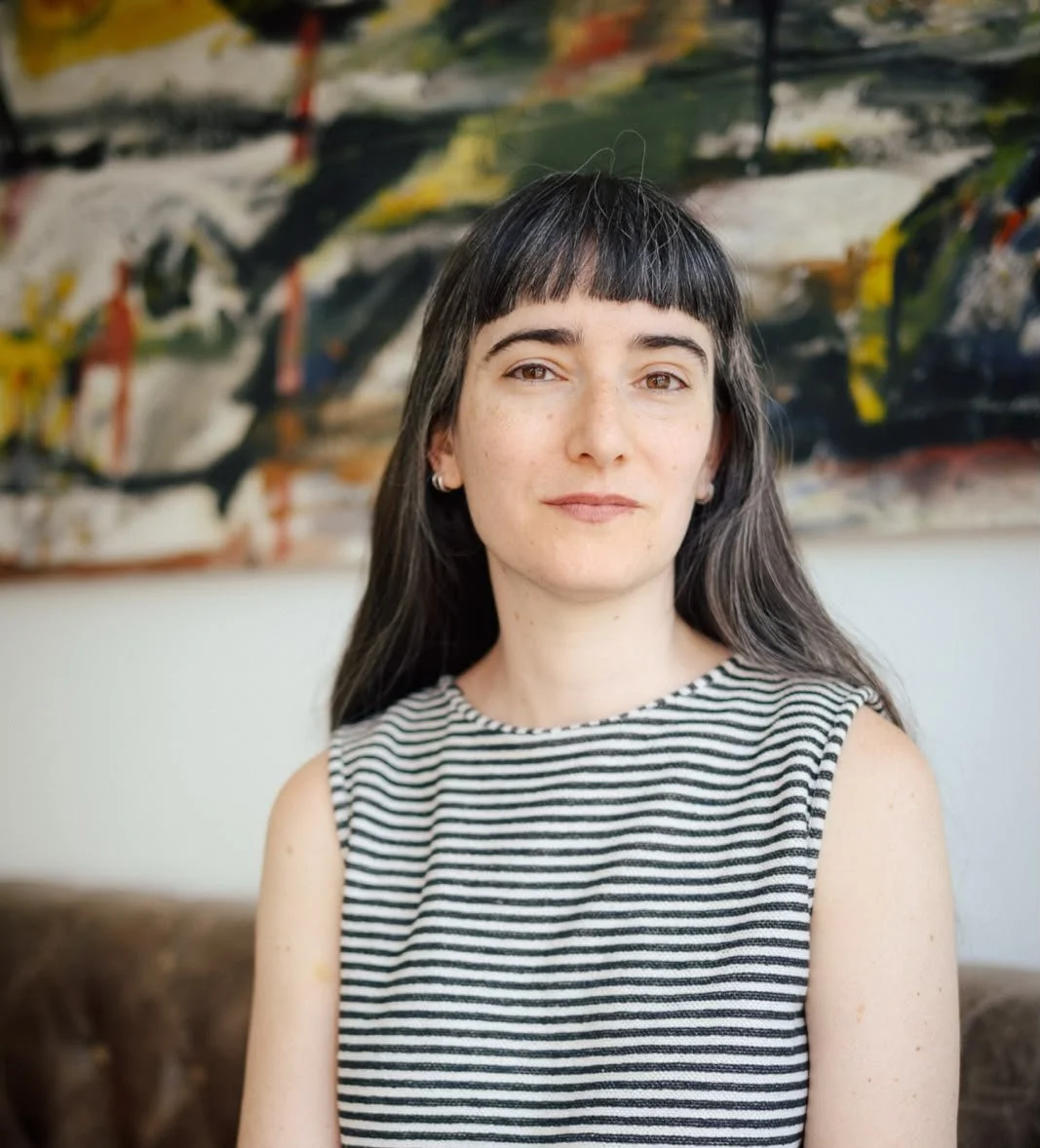
We are delighted to congratulate Lelia Stadler, Ph.D. candidate in History, on being selected for the University of Vienna’s 2027 Salo W. and Jeannette M. Baron Young Scholar Award.

Lelia Stadler, PhD Candidate, History

Lelia’s scholarship focuses on modern Jewish and Latin American history. Her dissertation is a social and legal history of Jewish immigration to South America, examining Jewish immigrants’ encounters with the Argentine state and how competing legal systems and regional norms shaped experiences of family, marriage, and divorce in a predominantly Catholic country.

Her publications include “In Search of Wandering Husbands: Jewish Migration, Desertion, and Divorce between Poland and Argentina, 1919–1939” (Brill, 2020), with “Ethical and Legal Bigamy: Transatlantic Jewish Families Caught between Conflicting Legalities, Argentina, 1930–1939” forthcoming in Jewish Social Studies.

We warmly congratulate Lelia on this well-deserved recognition.

Dr. Alexandra Birch Awarded Douglas Chalmers Graduate Scholars Lectureship

The Institute for Israel and Jewish Studies is proud to share that Dr. Alexandra Birch, a Mellon Teaching Fellow at the Harriman Institute and Lecturer in History, has been awarded the prestigious Douglas Chalmers Graduate Scholars Lectureship by Emeritus Professors in Columbia (EPIC). This honor recognizes outstanding graduate students whose work exemplifies intellectual distinction and a strong commitment to teaching and public engagement.

The Selection Committee commended Dr. Birch for a distinctive scholarly voice that merges performance and research, with particular attention to recovering music lost during the Holocaust and honoring composers whose legacies have long been overlooked.

Congratulations to Dr. Alexandra Birch on this well-earned recognition.

Announcing the New Issue of Iggrot Ha’Ari: Columbia’s Undergraduate Journal of Jewish Scholarship

We are pleased to share the latest issue of Iggrot Ha'Ari, Columbia's undergraduate journal of Jewish scholarship, now available online.

Published each spring with advisory from the Institute for Israel and Jewish Studies, Iggrot Ha'Ari is an open-access, interdisciplinary journal that features student research engaging with Jewish texts, identity, and religious thought. Its name—The Lion's Letters—pays tribute both to Columbia's mascot and to the rabbinic tradition of Responsa.

The journal seeks to foster thoughtful academic discourse on topics relevant to contemporary Jewish life while encouraging a wide range of analytical approaches. The journal aims to make writing an academic article on a Jewish topic accessible while giving writers the resources they need to create a high-quality piece that engages with and furthers the existing corpus of Jewish academia.


Read the new issue here: https://journals.library.columbia.edu/index.php/ari/issue/view/Iggrot25

Getting to Know…Solomon Mengesha

6787949A-F884-47B1-88B5-B80C1C29DE4A (1).jpeg

Solomon Mengesha is an M.A. Candidate in Jewish Studies.

1-    How did you get involved with Jewish Studies?

While working with the formerly incarcerated, I decided to continue my education and enrolled in graduate school, where I earned a M.A. in public administration (MPA). After that, I went to work for various private and non-profit organizations. However, in the back of my mind, I remembered two things about my late father. He used to call me Dr. Solomon for as long as I can remember and expected that I, one day, become a Doctor, which did not happen in his lifetime as he died in 2001. Second, I used to see my father, whom we called Abbe which is Amharic for father, listening to the AM/FM radio for information about Israel. I did not know why then, but before he died in 2001, I realized how much Israel and the Jewish people meant to him. He never got to see Israel but left me with his passion for Israel and the Jewish people. Now I'm seeking to do the things he wanted to do for himself but could not do in his lifetime. This is what led me to enroll in the Jewish Studies M.A. program at Columbia and research the Betha Israelis, in particular. In this regard, Dr. Isabelle Levy (M.A. Program Director), has been a great mentor and superb guide who is gentle yet challenged me to do better throughout my studies on Ethiopian Jews. I was also lucky to have studied with Dr. Debra Glasberg Gail last Spring in the Jews, Magic, and Science course, where I fell in love with the work of Isaac Luria, a leading rabbi and Jewish mystic of the 16th century. This course exposed me to Jewish poets, physicians, astronomers, rabbis, and thought leaders in Jewish history, including Maimonides. 

2- What are you currently researching and working on?

As part of my M.A., I am currently researching Betha Israel (Ethiopian Jews) material culture. As an outgrowth of my studies, I incorporated a non-profit organization named Our Story (Yegna Tariq in Amharic), which seeks to build bridges to share information in real-time through relevant data mining and evaluation, education, cultural interchange, and technology sharing. It aims to help create a local Betha Israel Material Culture Center that houses books, oral tradition, customs, and music.The information will be centered around and embedded within language, faith, education, contact with other communities, and the pursuant survival and development of its unique Jewish identity. Our Story aims to bring policy changes in Israel via public opinion, shaped by data-driven information gained when local communities create space, access resources, and allow other stakeholders to be directly or indirectly involved. I am also co-authoring a book about the Betha Israelis with the help, guidance, and support of Prof. Yehoshua Frenkel of University of Haifa. 

 3- What are you most looking forward to this Spring?

 I am looking forward to traveling to California to see my daughter. 

Holocaust Studies Fellowship: A Student’s Perspective

Screen Shot 2020-06-26 at 11.12.13 AM.png

By Ingrid Romero

In January 2019, I came across a video where multiple individuals on the street were asked if they knew about the Holocaust: What group of people did the Nazis target? What is Auschwitz? How many Jews were killed during the Holocaust? To my surprise, only one person had a vague idea about the Holocaust, the rest answered that Auschwitz was a country, or confused the Holocaust with the word hologram (yes, a three-dimensional image formed by the interference of light beams from a laser or other coherent light source). At the time I knew that if had been asked those questions I would’ve been just as ignorant and embarrassed as those who participated in that interview.

Since I was curious, I decided to Google the Holocaust and to be honest the result of my search was depressing, too deep to understand and quite overwhelming. Once I saw the images I had to stop. There was so much that I could not comprehend. Why did this happen? Why didn’t any other country help? And many other questions.

To give you a little background I was born in Colombia and moved to the States at 19. To say the least, nobody ever talks about the Holocaust or genocide in my country. World Wars I and II were never taught in History class and we lived in a convenient state of willful ignorance. I recently decided to complete my undergraduate education in Architecture at Columbia’s School of General Studies. When I heard that the Institute for Israel and Jewish Studies was offering a class on Holocaust Literature, I knew immediately this was my opportunity to learn about the Holocaust though a list of curated texts, novels, poems and songs. We were fortunate to be guided by Prof. Jeremy Dauber, a true scholar in Jewish Literature. The class of 15 students from various backgrounds spent the whole hour and 50 minutes engaged in honest and interesting discussion about the readings.

This class taught me through the lens of literature, music, and poems more than I could ever grasp from independent research. I wish the Holocaust was taught more regularly at Columbia. Prof. Dauber offered and opportunity to ask very difficult questions that I would have never been able to explore without his guidance.

As an Architecture student, the vision of forced labor and human sacrifice to achieve Nazi architectural goals, by means of oppression and genocide of the European Jewish population, still haunts me to this very moment. The main goal of my final research paper was to analyze survivors’ testimony and data through the means of architectural digital retracing of construction, to better understand the horrors of the Holocaust through the lens of architecture, forced labor and genocide. Events and ideas so far-fetched and agonizing that we as a society and in my case, a future architect, must ensure they will not happen ever again.

Jewish prisoners, both men and women, had different tasks in the building process, nonetheless they both experienced extreme physical oppression, which resulted in the premature death of the vast majority. According to survivors, the last year of the war (1945) was spent on an endless construction cycle. The construction period between April, 1943 and May, 1944 is often omitted by scholars.

Architects have the responsibility to envision and create spaces that improve the quality of life of society: spaces for working, education, housing, and leisure. Incongruently, the architecture of the Holocaust had the opposite intention, its goal was to use the forced labor of Jewish prisoners while carrying out their mass murder. My research about architecture during the Holocaust has served to show me, the detrimental effects that a vocation or a field of study can have on humanity if used for evil…many years of hard study, schooling, careful planning and design gone awry.

I was able to attend this class thanks to the generosity of a private donor. From the bottom of my heart I would like to thank this person for the invaluable opportunity to learn about the Holocaust and become more aware. It is imperative that we educate our younger generations. By understanding our history, we can make sure to never repeat the atrocities done to the Jewish people in Europe or anywhere else. Learning about the Holocaust and the resilience of survivors gives me hope that no matter how hard your circumstances are, it is up to you to be a survivor.

Ingrid Romero is a third-year architecture student at the School of General Studies.