Filtering by: 2026 - 2027
"Jewish fiddle from Sofia Magid’s collection"
Oct
15
12:00 PM12:00

"Jewish fiddle from Sofia Magid’s collection"

  • Institute for Israel and Jewish Studies (map)
  • Google Calendar ICS

Join the Institute for a presentation by Zisl Slepovitch on the Jewish fiddle in the pre-World War II southeastern Belarus from Sofia Magid’s collection.

Thursday, October 15, at noon | 617 Kent Hall

Sofia Magid’s recordings of Jewish musicians in Volyn and southeastern Belarus made between 1928-38, constitute one of a kind document that preserves and conveys styles and repertoire of Jewish instrumentalists and folk singers, of various age groups, professional, semiprofessional, and amateur alike. Following publication of these pieces’ transcriptions done by D. Zisl Slepovitch, this presentation is the first attempt to systematize this relatively small but uniquely important collection.

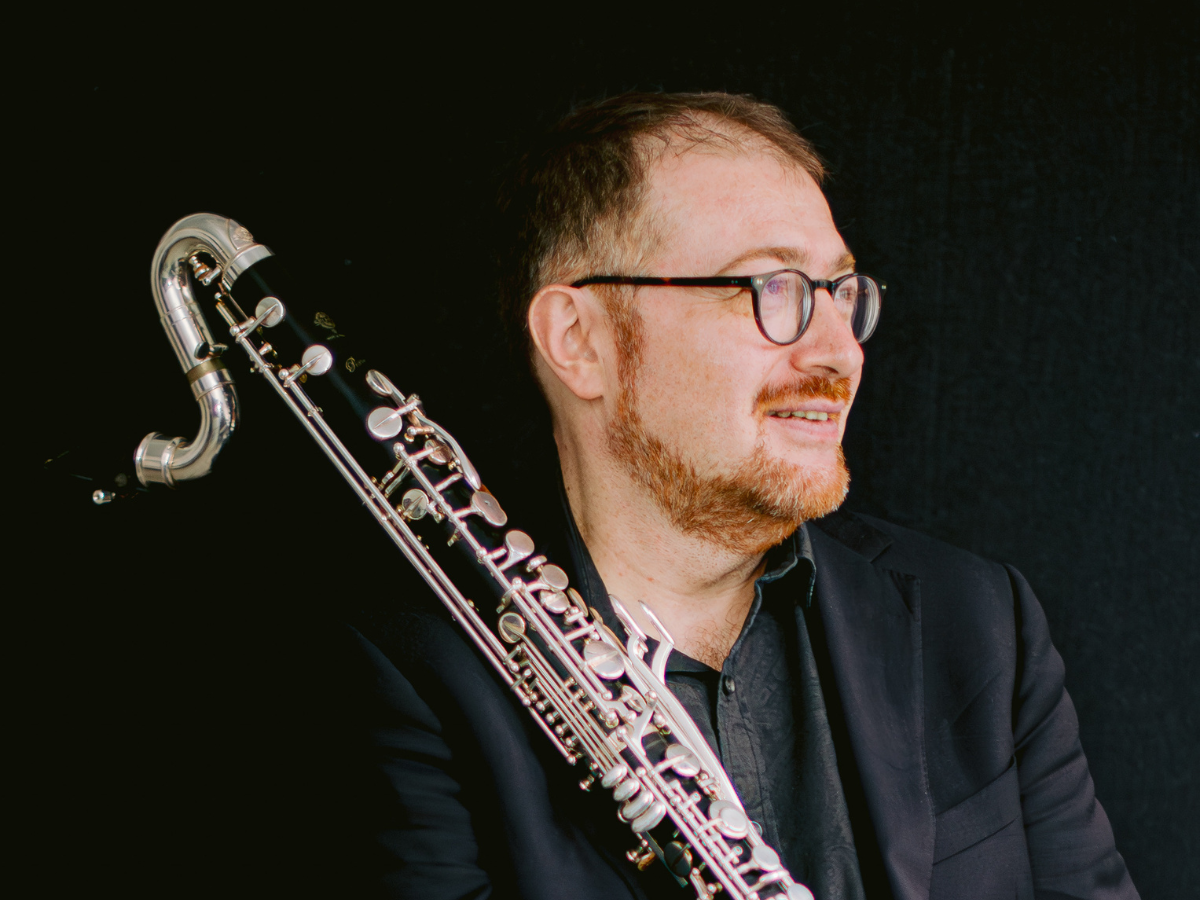
D. Zisl Slepovitch, born and raised in Minsk, Belarus, a New Yorker since 2008; he is a Jewish music scholar (PhD, Belarusian State Academy of Music), a sought-after classical, klezmer, and improvised music performer (woodwinds, keyboards), conductor, music producer, band leader, educator (music, Yiddish language), composer/arranger, and a musician-actor. He is a founding member of the Litvakus klezmer band, a Musician-in-Residence at the Fortunoff Video Archive for Holocaust Testimonies at Yale University, a pianist and music coordinator at Stephen Wise Free Synagogue (NYC), and a frequent contributor to the National Yiddish Theatre Folksbiene (NYC). His critically acclaimed credits include Musical Treasures from Sofia Magid's Jewish Collection (music folios series), Songs from Testimonies with the Zisl Slepovitch Ensemble and Sasha Lurje (3 albums), Fiddler on the Roof in Yiddish (off-Broadway, cast album), Defiance (movie), and more. @zislepovitch http://DmitriSlepovitch.com

*Guests must register by Tuesday, October 13, to be approved for campus access; unregistered guests will not be permitted on campus. Each guest must register individually using a unique email address.


Supported by the generosity of the Kaye and Radov families.

While all IIJS events are free and open to the public, we do encourage a suggested donation of $10.

View Event →
"Bruno Schulz and Galician Jewish Modernity"
Oct
21
12:00 PM12:00

"Bruno Schulz and Galician Jewish Modernity"

  • Institute for Israel and Jewish Studies (map)
  • Google Calendar ICS

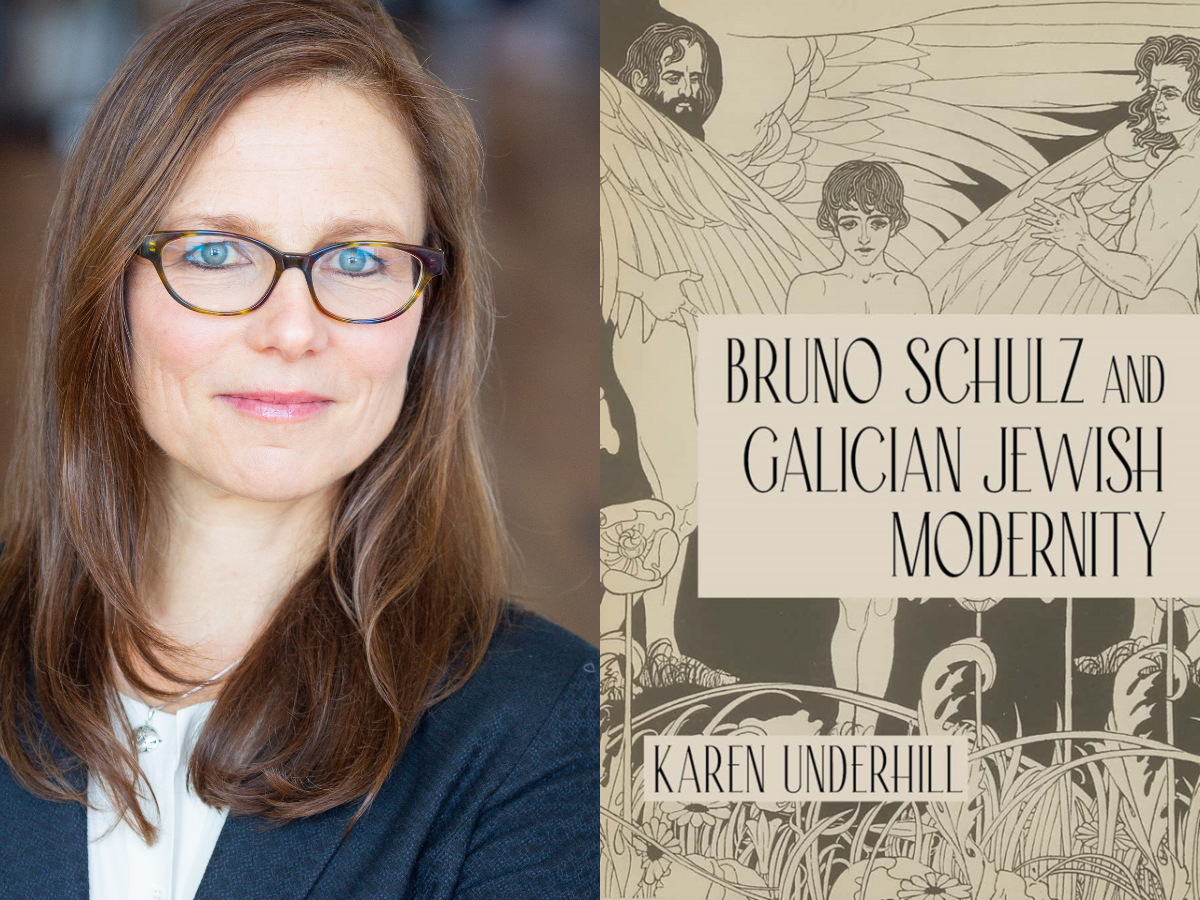
Karen Underhill joins IIJS to discuss her recent book, Bruno Schulz and Galician Jewish Modernity, which examines Bruno Schulz's diasporic Jewish modernism and his use of the Polish language to reflect on the modern Jewish experience.

Wednesday, October 21, at noon | 617 Kent Hall

In the 1930s, through the modernist prose of Bruno Schulz (1892–1942), in two short volumes—Cinnamon Shops and Sanatorium Under the Sign of the Hourglass—the Polish language became the linguistic raw material for a profound exploration of the modern Jewish experience. Rather than turning away from the language like a number of his Galician Jewish colleagues who would choose to write in Yiddish, Schulz used the Polish language to explore his own and his generation's relationship to East European Jewish exegetical tradition, and to deepen his reflection on golus or exile as a condition not only of the individual and of the Jewish community, but of language itself, and of matter. Drawing on new archival discoveries, this study explores Schulz's diasporic Jewish modernism as an example of the creative and also transient poetic forms that emerged in formerly Habsburg territory, at the historical juncture between empire and nation-state.

Karen Underhill is Associate Professor of Polish and Jewish Studies in the Department of Polish, Russian, and Lithuanian Studies at the University of Illinois Chicago. Her research focuses on multilingual Polish Jewish Culture, changing memory of Poland’s Jewish past, and hybrid and diasporic cultural forms that arose in the multilingual context of 19th and 20th century Poland and Central Europe. Her book Bruno Schulz and Galician Jewish Modernity (Indiana University Press, 2024) received the MLA Aldo and Jeanne Scaglione Prize for Studies in Slavic Languages and Literatures, the AATSEEL Best First Book Award, and the ASEEES Kulczycki Book Prize in Polish Studies. Her current research focuses on uses of the figures of Adam Mickiewicz and Jacob Frank in the Polish-Jewish cultural imagination. She is co-founder of Massolit Books & Café in Krakow, Poland; a member of the editorial board of POLIN: Studies in Polish Jewry; and on the Board of Directors of the Chicago YIVO Society.

*Guests must register by Monday, October 19, to be approved for campus access; unregistered guests will not be permitted on campus. Each guest must register individually using a unique email address.


Supported by the generosity of the Kaye family.

View Event →
"The Jews of Asia Minor, 214 BCE to 500 CE: Text and Materiality"
Nov
4
12:00 PM12:00

"The Jews of Asia Minor, 214 BCE to 500 CE: Text and Materiality"

  • Institute for Israel and Jewish Studies (map)
  • Google Calendar ICS

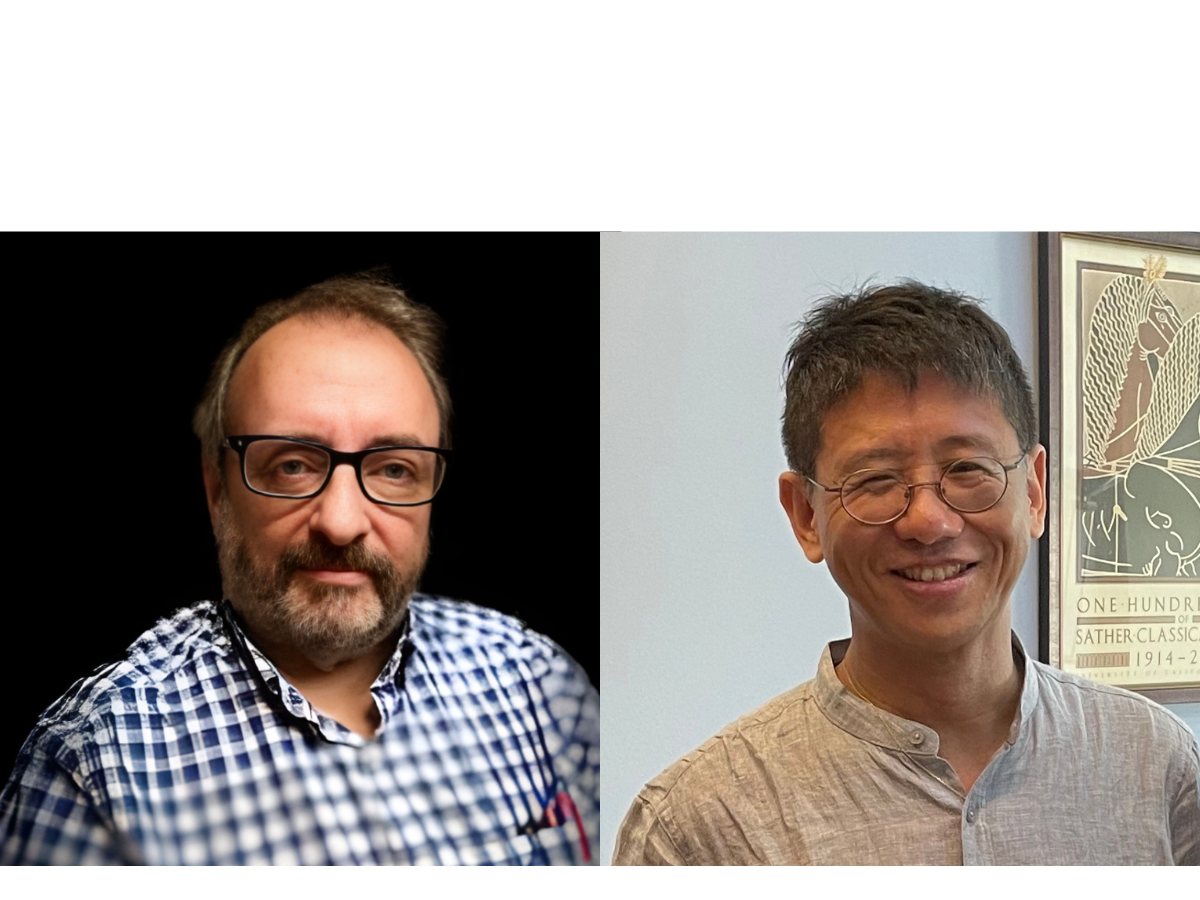
Join IIJS Professor Seth Schwartz for a discussion of his forthcoming book, The Jews of Asia Minor, 214 BCE to 500 CE: Text and Materiality.

Wednesday, November 4, at noon | 617 Kent Hall.

Co-sponsored by the Department of History and the Center for the Ancient Mediterranean.

The Jews of Asia Minor, 214 BCE to 500 CE: Text and Materiality,  explores the benefits and pitfalls of writing about an archaeologically rich but literarily poor topic. The results of this inquiry are strongly revisionist: The Jews in ancient Asia Minor, or Anatolia, are shown to have been far from having achieved a perfect balance between integration in their host cities and self-preservation that scholars have long ascribed to them. Rather, the Jews experienced conflict and poverty, struggling to carve out a place for themselves in the Greek cities of Asia. Jewish communal institutions played little role before Late Antiquity, but Jews sometimes achieved a diffuse sense of community through trade guild membership and participation in theatrical events. Surprisingly, many of them expressed pride in their Roman identity but rarely, or never, their local civic identity. Even during the Jews’ brief period of prosperity and heightened civic engagement, c. 400 CE, their Jewish lives were characterized by strong localism, featuring many elements that distinguish the Jews of Asia sharply from those elsewhere in the Roman Empire.

Seth Schwartz is the Lucius N. Littauer Professor of Classical Jewish Civilization in the Departments of History and Classics at Columbia University, where he also chairs the Graduate Program in Classical Studies. He received his PhD in History at Columbia in 1985. Before returning to Columbia in 2009, Schwartz taught at Cornell, the University of Rhode Island and the Jewish Theological Seminary, had research fellowships at the Hebrew University of Jerusalem, the Harvard Society of Fellows and King’s College Cambridge. He wrote Consuls of the Later Roman Empire (Atlanta: Scholars Press, 1987)(with Roger Bagnall, Alan Cameron and Klaas Worp), Josephus and Judaean Politics (Leiden: Brill, 1990), Imperialism and Jewish Society, 200 BCE to 640 CE (Princeton: Princeton University Press, 2001), Were the Jews a Mediterranean Society? Reciprocity and Solidarity in Ancient Judaism (Princeton: Princeton University Press, 2010), and The Ancient Jews From Alexander to Muhammad (Cambridge: Cambridge University Press, 2014).

*Guests must register by Monday, November 2, to be approved for campus access; unregistered guests will not be permitted on campus. Each guest must register individually using a unique email address.


Department of History

Supported by the generosity of the Kaye and Radov families.

While all IIJS events are free and open to the public, we do encourage a suggested donation of $10.

View Event →
The 2026 Professor Dan Miron Lecture in Hebrew Literature
Nov
19
2:00 PM14:00

The 2026 Professor Dan Miron Lecture in Hebrew Literature

  • Institute for Israel and Jewish Studies (map)
  • Google Calendar ICS

IIJS is pleased to welcome Shai Ginsburg for the fall 2026 Professor Dan Miron Lecture in Hebrew Literature: “From Timber to Text: Hebrew Culture and Class in Imperial Russia.”

Thursday, November 19, at 2:00 p.m. | 617 Kent Hall.

In his paper, Prof. Ginsburg traces the surprising entanglement of commerce, capital, and Hebrew culture in the Jewish communities of the mid-nineteenth-century Russian Empire. Focusing on the town of Kapyl (Kopyl) and drawing on autobiographical and fictionalized autobiographical writings by Abraham Jacob Paperna and Sholem Yankev Abramovich (Mendele Moykher-Sforim), it argues that the transformation of Hebrew education—and, with it, the “emergence” (though this term itself is debatable) of modern Hebrew fiction—cannot be understood simply as the triumph of Maskilic ideology. Rather, new forms of Hebrew learning emerged alongside the expansion of capitalist networks, the circulation of goods and people across the Russian Empire and beyond, and the rise of a Jewish middle class eager to redefine its social identity.

Using Kapyl as a case study, the talk will reflect on the relationship between different historiographical frameworks: between so-called Jewish and general history; between social, economic, and literary history; between the history of Hebrew literature and Jewish literatures in other languages; and between the history of Hebrew literature and the history of the Hebrew language itself.

Shai Ginsburg teaches at Duke University. His work focuses on modern Jewish cultures and politics, with particular attention to Hebrew and Jewish intellectual histories. He has published on Israeli literature and cinema, Zionism, the history of the Hebrew language, and critical theory. In recent years, he has also developed a strong interest in games—both video games and board games—and has devoted much of his teaching to the study of games and play. His current project traces the emergence of Hebrew speech across the Jewish world in the years leading up to the First World War.

*Guests must register by Tuesday, November 17, to be approved for campus access; unregistered guests will not be permitted on campus. Each guest must register individually using a unique email address.


Supported by the generosity of the Knapp family.

While all IIJS events are free and open to the public, we do encourage a suggested donation of $10.

View Event →
"How the Amoraim Reshape Lineage"
Dec
2
12:00 PM12:00

"How the Amoraim Reshape Lineage"

  • Institute for Israel and Jewish Studies (map)
  • Google Calendar ICS

Yedidah Koren joins IIJS to discuss “How the Amoraim Reshape Lineage” and the multiple ways lineage and identity are imagined in rabbinic sources.

Wednesday, December 2, at noon | 617 Kent Hall

Scholars of ancient Judaism have discussed lineage for well over a century. These studies have tended to focus on the extent to which various groups “valued” lineage or merit. Using this dichotomic lens, scholars have posited an ideological divide between Palestinian and Babylonian rabbis, claiming that the former were more lenient regarding lineage, while the latter were more stringent.

This divide, however, does not align with many sources, which Prof. Yedidah Koren has examined in previous research. More importantly, several central rabbinic sources on lineage do not neatly fall on either side of the stringent/lenient divide, and scholars have offered conflicting interpretations of them. In this talk, Koren argues that the very question of rabbinic attitudes towards lineage assumes that “lineage” itself is a stable construct—one that the rabbis either value or disregard—thereby overlooking the multiple ways in which the rabbis envision and construe lineage.

Koren focuses on two primary sets of such sources. One, unique to Babylonian Amoraim, connects lineage to geography and uses it to put into place inner Jewish separation based on geography. The other, found in both Palestinian and Babylonian Amoraic sources, identifies lineage with character. In both cases, she shows how the rabbis reshape lineage while drawing on Greco-Roman tropes. Additionally, she highlights developments particular to the Babylonian Amoraim, demonstrating how they not only re-envision lineage but also genealogical knowledge itself, and how they deploy lineage to advance other goals of separation and delegitimization.

By drawing out the pluriformity and malleability of lineage in rabbinic sources and by offering a more nuanced account, this talk contributes to the study of the history of Halakhah and Jewish thought. By looking at the multiple ways in which lineage is imagined and separation is initiated, this talk sheds new light on ancient Jewish constructions of identity. 

Yedidah Koren is an Assistant Professor in the Department of Religion at Princeton University. Specializing in Ancient Jewish and Rabbinic literature, her work focuses on identity, constructions of Jewishness, the body, Jewish practice in antiquity, and the formation of Halakhah. She is currently completing her first book, Blemished Jews: Descent, Identity, and Social Control in Rabbinic Literature, which shows how the rabbis used the notion of blemished lineage to define Jewishness and belonging.

*Guests must register by Monday, November 30, to be approved for campus access; unregistered guests will not be permitted on campus. Each guest must register individually using a unique email address.


Supported by the generosity of the Kaye and Radov families.

While all IIJS events are free and open to the public, we do encourage a suggested donation of $10.

View Event →
"Vassily Grossman: expanding the European canon of Holocaust literature"
Dec
7
12:00 PM12:00

"Vassily Grossman: expanding the European canon of Holocaust literature"

Polly Zavadivker joins IIJS for a webinar to discuss the writings of Vasily Grossman and their place within European Holocaust literature, examining his engagement with themes of the Holocaust and totalitarianism.

Monday, December 7, at noon | Zoom

The Soviet Jewish writer Vasily Grossman was one of the first European writers to document what came to be called the Holocaust. His writings about the Warsaw Ghetto, Treblinka death camp, and mass shooting sites in Ukraine were known to his contemporaries, yet until recently, and in translation, received far less attention among Western audiences. This talk makes the case for placing Grossman’s wartime essays and postwar novels in dialogue with well-known literary and philosophical texts about the Holocaust and totalitarianism, including those of Primo Levi and Hannah Arendt.

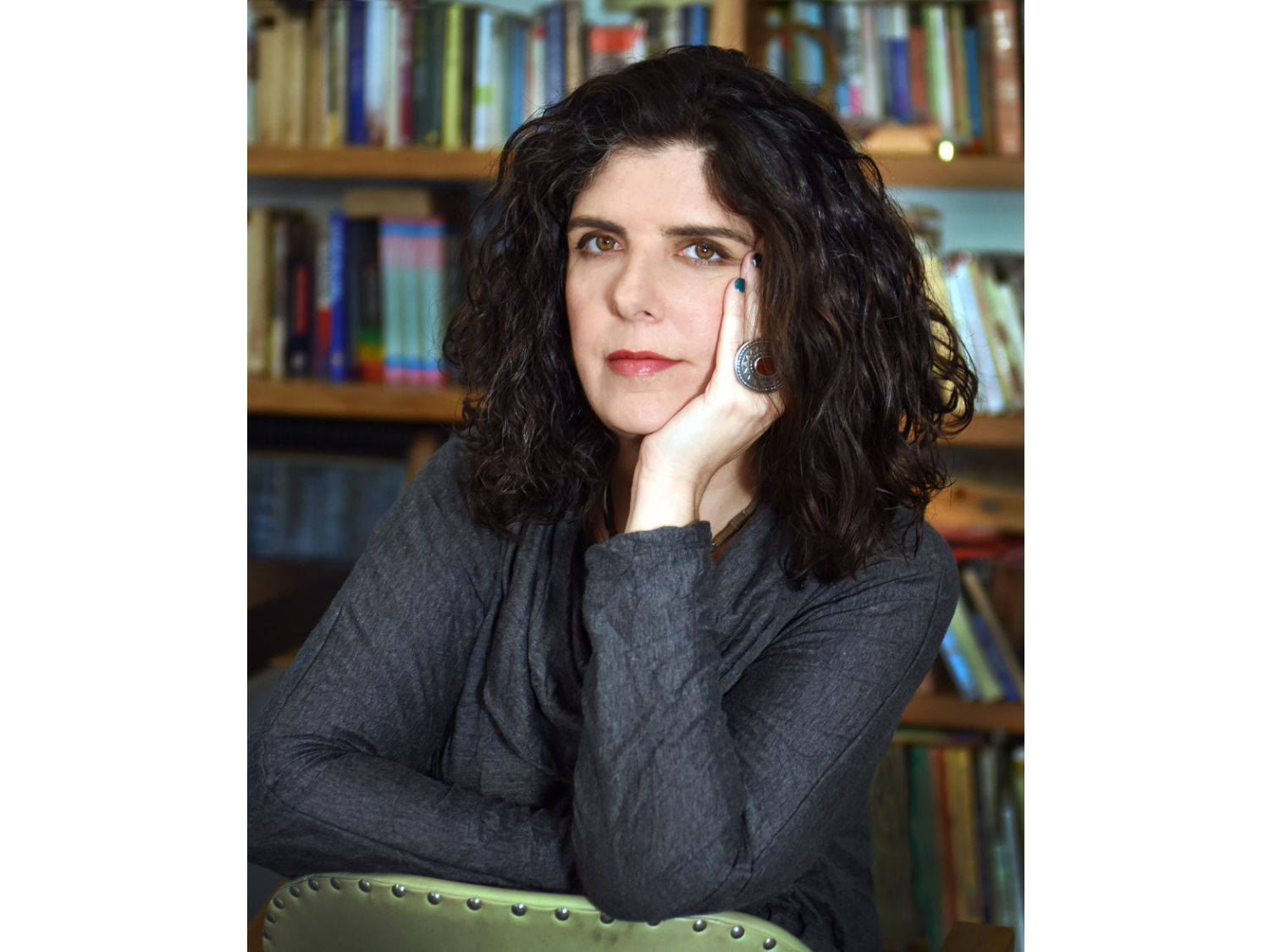
Polly Zavadivker is Associate Professor of History and Director of the Jewish Studies Program at the University of Delaware. Her book, A Nation of Refugees: World War I and Russia’s Jews (Oxford University Press, 2024), received the Lincoln Book Prize, was a National Jewish Book Award Finalist, and received an Honorable Mention for the Salo Baron Book Prize. She also edited and translated S. An-sky’s The 1915 Diary of S. An-sky: A Russian Jewish Writer at the Eastern Front (Indiana University Press, 2016). In two current projects, she examines the life of Holocaust survivor Abraham Turow and the works of Vasily Grossman in the context of European Holocaust literature.


Supported by the generosity of the Kaye and Radov families.

While all IIJS events are free and open to the public, we do encourage a suggested donation of $10.

View Event →
"Unshackling our Reading Practices: Slavery and Emancipation in the Babylonian Talmud"
Dec
9
12:00 PM12:00

"Unshackling our Reading Practices: Slavery and Emancipation in the Babylonian Talmud"

  • Institute for Israel and Jewish Studies (map)
  • Google Calendar ICS

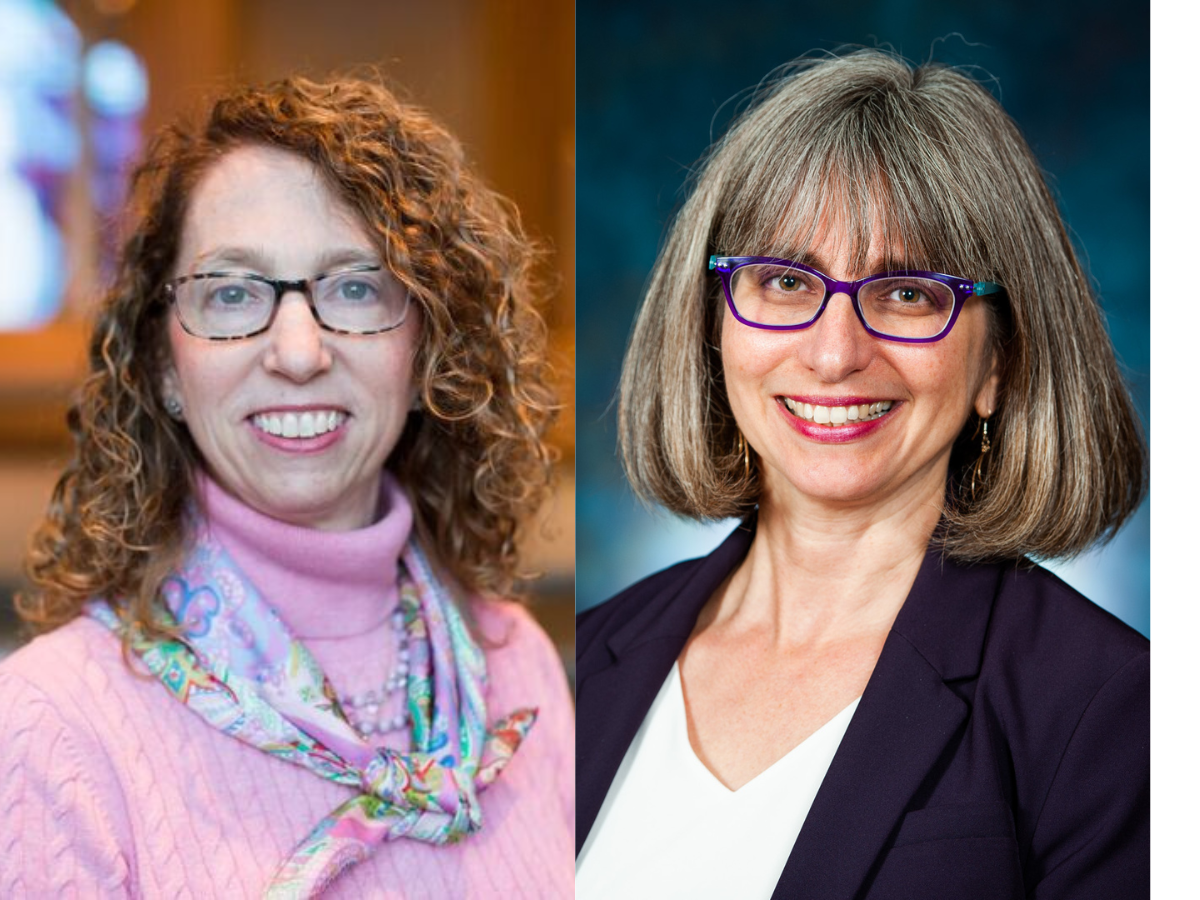
Join the Institute for a seminar with Marjorie Lehman and Mira Wasserman as they explore slavery in the Talmud.

Wednesday, December 9, at noon | 617 Kent Hall

This presentation will introduce two slaves from within the pages of the Babylonian Talmud, Tavi and Minyamin. As part of Marjorie Lehman’s and Mira Wasserman’s larger project on slavery in the Talmud, they will show how interpretations of the sources that discuss Tavi and Minyamin reflect divergent conceptions of the institution of slavery and of Jews as slaveholders. In this lecture, they will complicate the meaning of the word “eved” (slave) in rabbinic sources to expose different redactional agendas in different talmudic contexts.

Marjorie Lehman is Professor of Talmud and Rabbinics at The Jewish Theological Seminary and the Area Chair of Rabbinic Literatures and Cultures. Her books include: The En Yaaqov: Jacob ibn Habib’s Search for Faith in the Talmudic Corpus (Wayne State University Press, 2012)  and Bringing Down the Temple House: Engendering Tractate Yoma (Brandeis University Press, 2022). She has co-edited two books, Mothers in the Jewish Cultural Imagination (Liverpool: Littman Library of Jewish Civilization at Liverpool University Press, 2017) and Learning to Read Talmud: What it Looks Like and How It Happens (Academic Studies Press, 2017). She is also the co-director of the digital humanities project in Jewish Studies called Footprints: Jewish Books in Time and Place (http://footprints.ctl.columbia.edu/). She co-directs the Jewish Librarianship Certificate Program, a joint endeavor between the library of the Jewish Theological Seminary and the Association of Jewish Libraries. 

Mira Beth Wasserman is Vice President for Academic Affairs at Reconstructing Judaism, where she serves as Associate Professor of Rabbinic Literature and Dean of the Reconstructionist Rabbinical College. She is co-editor of Modern Jewish Ethics Since 1970: Writings on Methods, Sources and Issues (2025), part of the Brandeis Library of Modern Jewish Thought. Her book, Jews, Gentiles, and Other Animals: The Talmud after the Humanities (Penn Press, 2017), was awarded the Baron Prize for the best first book in Jewish studies published in 2017.  As director of the Center for Jewish Ethics from 2017 until 2025, Wasserman pursued public scholarship on race, gender, and Jewish ethics. She led the NEH-funded project Race, Religion & American Judaism, sparking new scholarship and developing resources forstudying the multiracial, multicultural realities of Jewish life.

*Guests must register by Monday, December 7, to be approved for campus access; unregistered guests will not be permitted on campus. Each guest must register individually using a unique email address.


Supported by the generosity of the Kaye family.

View Event →